Monday, May 11, 2026
There’s something both exciting and slightly dangerous about deciding to assemble furniture yourself. Especially the beautiful wardrobe systems online that look so clean, organized, and effortless in the photos. You see the finished vision immediately. The soft lighting. The neatly arranged shelves. The aesthetic storage boxes. The perfectly placed handbags and shoes. In your mind, the hardest part is already done…paying for it. Because let’s be honest, most of us choose the self-assembly version for one reason, it’s usually less expensive. A little more work upfront in exchange for the hope of getting the same polished result in the end.
Then the box arrives.
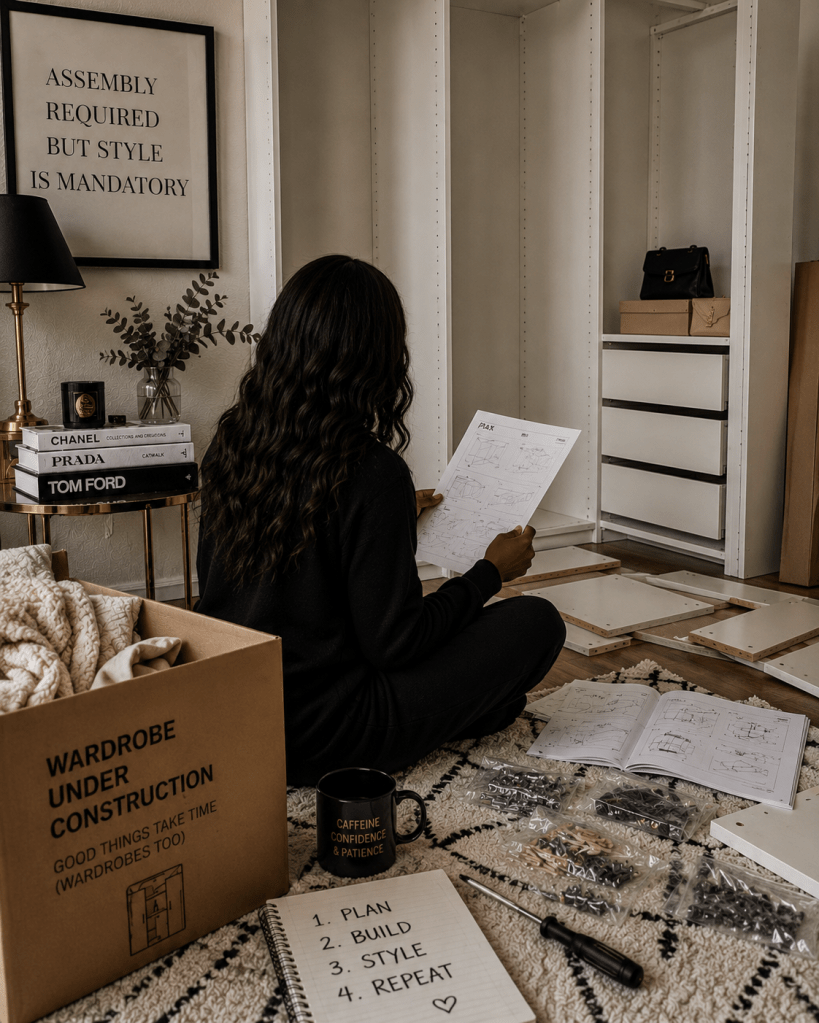
Suddenly there are wooden panels spread across the floor, hardware in tiny unlabeled bags, and instructions that somehow manage to say everything and nothing at the same time. And if we’re being honest, those picture-only instructions feel a little disrespectful. One tiny diagram is apparently supposed to explain an entire construction process while you sit there holding two identical pieces wondering why neither one fits the way it’s supposed to.
And that’s exactly what these last few months at work have felt like.
I was given a vision by leadership. A direction. A sample organizational chart showing what they wanted the division to eventually become. The assignment sounded exciting because I could build something from the ground up. The only problem? Somewhere between the vision and the actual building process, the vision and instructions started changing. Approvals slowed down. The division I’m supposed to establish started becoming the place where unresolved pieces, floating responsibilities, and “we’ll put this here for now” assignments quietly landed. The expectation to continue building the division in this dynamic never stopped and neither did the work.
And that’s where flexibility enters the conversation. Not the polished, motivational speaker version of flexibility companies love to advertise, but the real version. The version where you’re adjusting in real time while still trying to the vision and produce something functional and polished. The version where communication matters because unclear instructions can change the entire outcome. The version where patience quietly becomes one of the most important tools in the room.
Still, I think that’s why this whole experience made so much sense to me through a fashion lens. The most beautiful spaces, wardrobes, and even closet organization systems usually involve revisions, adjustments, missing pieces, and moments where you step back wondering if you accidentally assembled part of it backwards.
At this point, I’m still somewhere between Step 4 and “insert wooden dowels carefully.”
And honestly? I’m curious if anyone else has experienced this feeling lately, at work, at home, or even just trying to assemble something that looked much easier in the picture than it did in real life.
Because so far, I’ve learned flexibility matters. Communication matters. Patience definitely matters. But most importantly, once you stop seeing the vision, there’s a problem.
To be continued…


Leave a Reply