Category: Fashion, Career and Life Blog

  • Group Chat Therapy

    Sunday, May 17, 2026

    There was a time when therapy looked a lot different for me. It looked like random lunch dates with my girlfriends in the middle of the work week, stopping by somebody’s office just long enough to exchange one look before both of us started laughing, or quick “you busy?” texts after a stressful meeting. Back then, most of my family and closest girlfriends lived nearby. We were all balancing work, relationships, deadlines, and adulthood together in real time. Sometimes the conversations were serious. Sometimes they were completely unserious. Either way, laughter was always involved. And honestly? Laughter has always been therapy for me.

    Several years ago, I moved away for work and opportunity. Like a lot of people, I made the decision believing I was building a better quality of life for my family. Less traffic. Lower cost of living. Better schools. More peace. On paper, it made complete sense. And truthfully, in many ways, it was the right decision. But what nobody talks about enough is the emotional trade-off that sometimes comes with starting over somewhere new. The quiet distance between you and the people who once helped make life feel lighter.

    As I get older, I’ve realized I genuinely enjoy solitude. I like peace. I like quiet mornings and slower weekends. I like water features and backyard gardening. I like coffee on the deck watching the sunrise and wine in the evenings watching the sunset. That kind of thing. But distance has also taught me there’s a difference between enjoying solitude and missing your people. Because no matter how independent you become, there’s something healing about being around people who knew you before the stress, before the polished professionalism, before adulthood became one long calendar invitation.

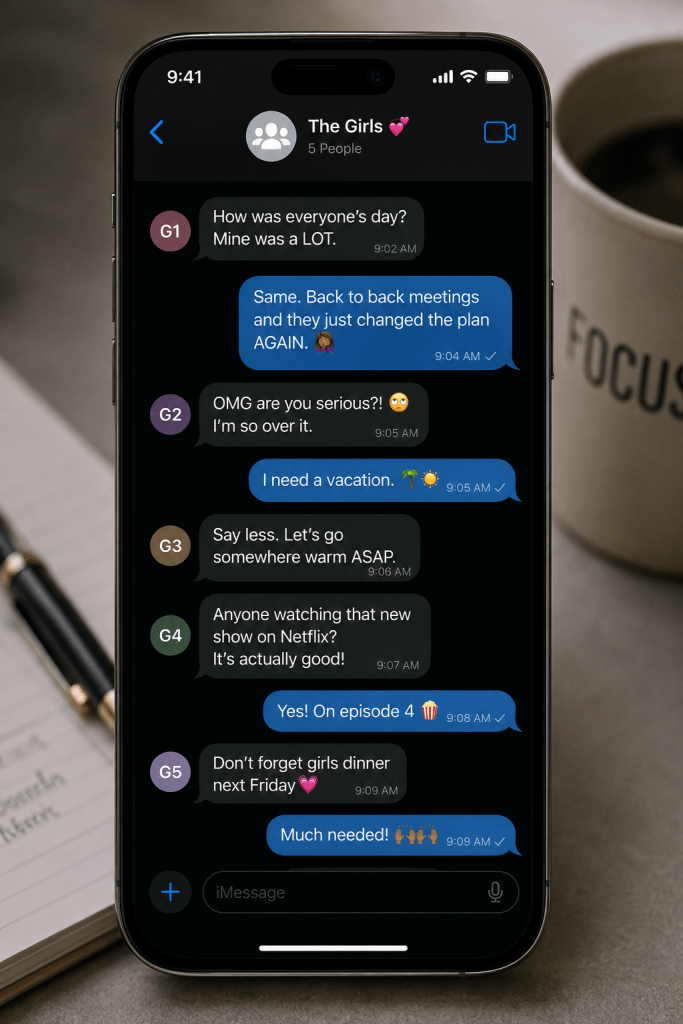
    So now, in between work schedules, different cities, and life moving faster than any of us expected, we have the group chat. One minute we’re discussing workplace drama, the next minute somebody’s sharing vacation ideas, binge worth shows, movie critiques, and then suddenly we’re deep into conversations about relationships, burnout, family, office politics, and whether any of us actually know what we’re doing anymore. Sometimes it’s serious. Sometimes it’s hilarious. Most times it’s both. But underneath all the jokes is something deeper: support. Real support. The kind that reminds you other women are carrying versions of the same weight too.

    And somehow the group chat became its own form of therapy. Oddly enough, fashion gives me that same feeling sometimes. It became therapeutic for me too. Not in the superficial “buy more things” kind of way, but in the creative sense. The same way some people garden, decorate, paint, journal, or rearrange furniture when life feels heavy. There’s something calming about playing with color combinations, textures, accessories, boots, bags, or even trying to style pieces you’ve owned for years in a completely different way. Fashion gives you room to reinvent yourself without having to completely reinvent your life. Some days it’s less about getting dressed and more about restoring a certain kind of energy.

    Honestly, I think we survive a lot more whether through shared laughter or style inspiration, than people realize.

    To be continued…

  • Values….Not Included

    Thursday, May 7, 2026

    The Accountability Gap

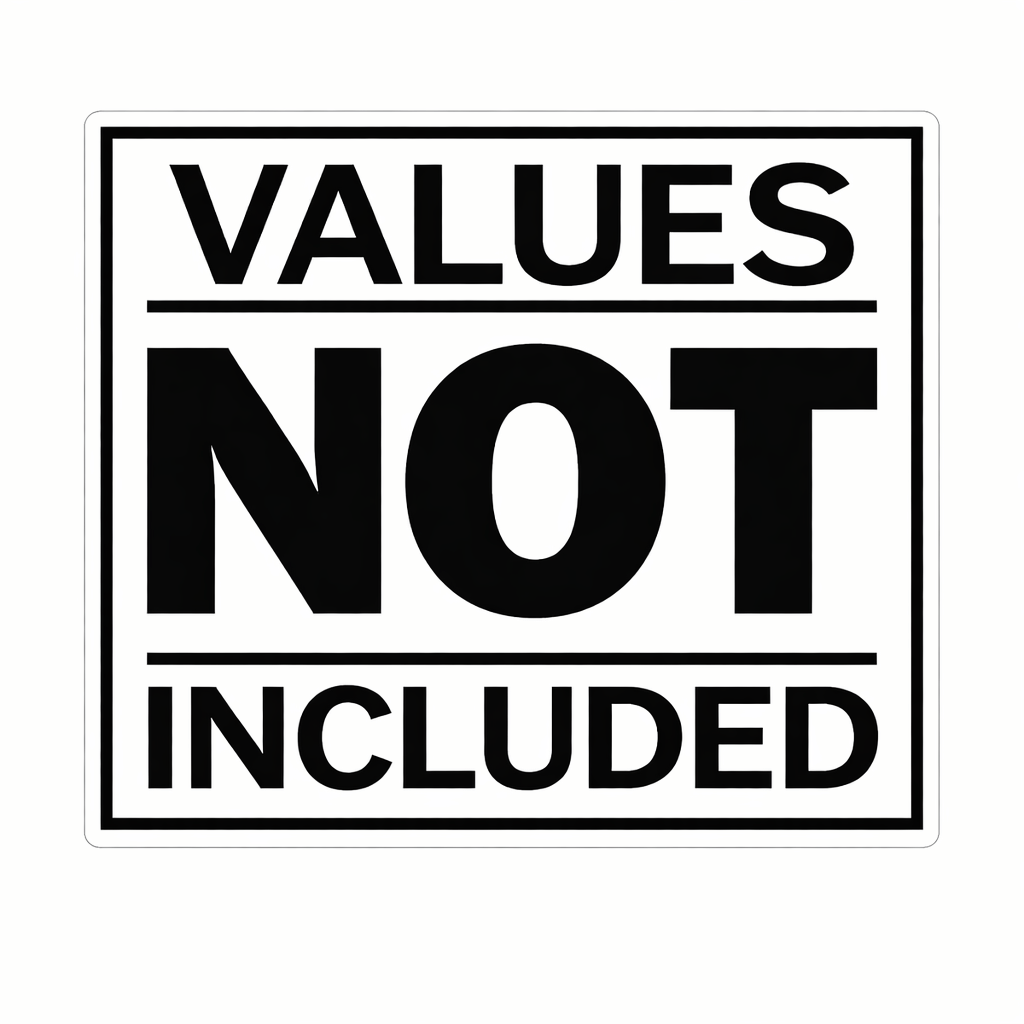
    The words change depending on what needs to be justified, and the values and standards only apply until something more important comes up. I’ve been in environments where phrases like people matter, customers come first, and leadership reflects integrity are repeated often enough that they start to feel like a given. It sounds structured, intentional, almost reassuring, like there’s a clear foundation guiding how things operate. But over time, you begin to notice the shift, not all at once, but in small moments where decisions don’t quite align with what was emphasized. A priority changes, a standard becomes flexible, or accountability seems to apply differently depending on the situation. And that’s when it starts to register that the messaging isn’t necessarily wrong, it’s just not consistent.

    What becomes more apparent is that it’s not a lack of understanding, it’s a matter of application. Values are easy to uphold when nothing is being challenged, when there’s no pressure or competing demand forcing a real decision to be made. But when those moments come up, the language adjusts to support whatever direction is needed, and what once sounded absolute becomes situational. It’s subtle, but it’s consistent enough that you can’t ignore it once you see it. You start to realize that some environments aren’t built on fixed standards, they’re built on what works in the moment. And once that pattern becomes clear, it changes how you interpret everything else that’s said.

    It reminds me a lot of clothing brands, especially the ones that rely heavily on image and messaging. There are pieces that look perfect on the hanger, structured, well-presented, styled in a way that makes you feel like you’re getting something of value. But once you actually wear them, you notice the difference in quality, in construction, in how well they hold up over time. The stitching isn’t as strong as it appeared, the fit doesn’t quite sit the way it should, and what felt like a solid investment starts to feel temporary. And that’s when you understand that something can be positioned as high quality without actually being built that way. It was designed to present well, not necessarily to perform well.

    At a certain point, you stop relying on what something claims to be and start paying closer attention to how it shows up, especially when there’s pressure involved. Because that’s where consistency either holds or it doesn’t, and that’s where the real standard reveals itself. It’s the same approach you take when building a wardrobe that actually works, choosing pieces that are reliable, structured, and consistent, not just visually appealing. You learn to pay attention to patterns instead of promises, to what holds up instead of what sounds good. And once you make that shift, it becomes easier to recognize what’s aligned and what only appears to be. Not everything that carries a label is built to last, and not everything that sounds right will hold up over time.